APR is that easy rate of interest plus extra charges and expenses that come with buying the loan and purchase. It's often called the portion rate. When you see mortgage rates promoted, you'll normally see both the interest ratesometimes labeled as the "rate," which is the easy rate of interest, and the APR.
The principal is the amount of money you borrow. The majority of home mortgage are basic interest loansthe interest payment does not compound over time. In other words, overdue interest isn't contributed to the staying principal the next month to result in more interest paid in general. Instead, the interest you pay is set at the start of the loan - how home mortgages work.
The balance paid to each shifts over the life of the loan with the bulk of the payment applying to interest early on and then principal in the future. This is known as amortization. 19 Confusing Home Loan Terms Analyzed deals this example of amortization: For a sample loan with a starting balance of $20,000 at 4% interest, the regular monthly payment is $368.33.
For your thirteenth payment, $313.95 goes to the principal and $54.38 goes to interest. There are interest-only home mortgage loans nevertheless, where you pay all of the interest before ever paying any of the principal. Interest ratesand therefore the APRcan be different for the exact same loan for the exact same piece of property.
How Exactly Do Mortgages Work for Dummies
You can get your totally free credit rating at Credit.com. You also get a totally free credit report card that reveals you how your payment history, financial obligation, and other elements impact your rating along with suggestions to improve your rating. You can see how various rates of interest affect the amount of your monthly payment the Credit.com mortgage calculator.
In addition to the interest the principal and anything covered by your APR, you may also pay taxes, house owner's insurance and home mortgage insurance as part of your month-to-month payment. These charges are different from charges and costs covered in the APR. You can normally select to pay real estate tax as part of your mortgage payment or separately by yourself.
The lender will pay the home tax at that time out of the escrow fund. House owner's insurance coverage is insurance coverage that covers damage to your home from fire, mishaps and other concerns. Some lending institutions need this insurance coverage be included in your month-to-month home mortgage payment. Others will let you pay it independently.
Like property taxes, if you pay homeowner's insurance coverage as part of your monthly home mortgage payment, the insurance coverage premium goes enter into escrow account used by the lender to pay the insurance when due. Some types of home mortgages require you pay private home mortgage insurance coverage (PMI) if you don't make a 20% deposit on your loan and up until your loan-to-value ratio is 78%.
The Best Strategy To Use For Reverse Mortgages And How They Work
Learn how to navigate the home loan procedure and compare home loan loans on the Credit.com Home Loan Loans page. This article was last released January 3, 2017, and has actually since been upgraded by another author. 1 US.S Census Bureau, https://www.census.gov/construction/nrs/pdf/quarterly_sales.pdf.
Most likely among the most confusing aspects of home loans and other loans is the calculation of interest. With variations in intensifying, terms and other elements, it's difficult to compare apples to apples when comparing home mortgages. Sometimes it looks like we're comparing apples to grapefruits. For instance, what if you want to compare a 30-year fixed-rate home loan at 7 percent with one point to a 15-year fixed-rate mortgage at 6 percent with one-and-a-half points? Initially, you need to keep in mind to likewise think about the costs and other expenses associated with each loan.
Lenders are required by the Federal Reality in Lending Act to reveal the effective portion rate, in addition to the overall financing charge in dollars. Advertisement The interest rate (APR) that you hear a lot about allows you to make real comparisons of the real expenses of loans. The APR is the average yearly finance charge (which includes charges and other loan costs) divided by the quantity obtained.
The APR will be slightly greater than the rate of interest the loan provider is charging since it includes all (or most) of the other charges that the loan carries with it, such as the origination charge, points and PMI premiums. Here's an example of how the APR works. You see an advertisement offering a 30-year fixed-rate home mortgage at 7 percent with one point.
https://www.facebook.com/wesleyfinancialgroup style="clear:both" id="content-section-3">Getting My How Do Mortgages Work Property Law To Work
Easy choice, right? In fact, it isn't. Luckily, the APR considers all of the fine print. Say you require to obtain $100,000. With either loan provider, that indicates that your month-to-month payment is $665.30. If the point is 1 percent of $100,000 ($1,000), the application charge is $25, the processing fee is $250, and the other closing fees amount to $750, then the total of those costs ($2,025) is deducted from the actual loan quantity of $100,000 ($100,000 - $2,025 = $97,975).
To discover the APR, you identify the interest rate that would relate to a regular monthly payment of $665.30 for a loan of $97,975. In this case, it's truly 7.2 percent. So the 2nd lender is the better offer, right? Not so quickly. Keep checking out to discover the relation between APR and origination costs.
A home loan is likely to be the largest, longest-term loan you'll ever take out, to purchase the biggest possession you'll ever own your house. The more you understand about how a home mortgage works, the better decision will be to pick the home loan that's right for you. In this guide, we will cover: A mortgage is a loan from a bank or loan provider to help you fund the purchase of a house.
The home is utilized as "collateral - how home mortgages work." That suggests if you break the guarantee to pay back at the terms developed on your home loan note, the bank deserves to foreclose on your home. Your loan does not become a home loan until it is connected as a lien to your house, implying your ownership of the home becomes subject to you paying your new loan on time at the terms you consented to.
What Does How Do Interest Only Mortgages Work Mean?
The promissory note, or "note" as it is more commonly identified, lays out how you will pay back the loan, with details including the: Rate of interest Loan amount Regard to the loan (30 years or 15 years are typical examples) When the loan is thought about late What the principal and interest payment is.
The mortgage essentially gives the loan provider the right to take ownership of the property and sell it if you don't pay at the terms you agreed to on the note. The majority of home mortgages are contracts between 2 parties you and the lender. In some states, a third person, called a trustee, may be contributed to your home loan through a document called a deed of trust. Some home loan might have no amortization, or need complete repayment of any remaining balance at a certain date, or even negative amortization. Payment quantity and frequency: The quantity paid per period and the frequency of payments; in some cases, the amount paid per duration might alter or the debtor might have the option to increase or reduce the quantity paid.
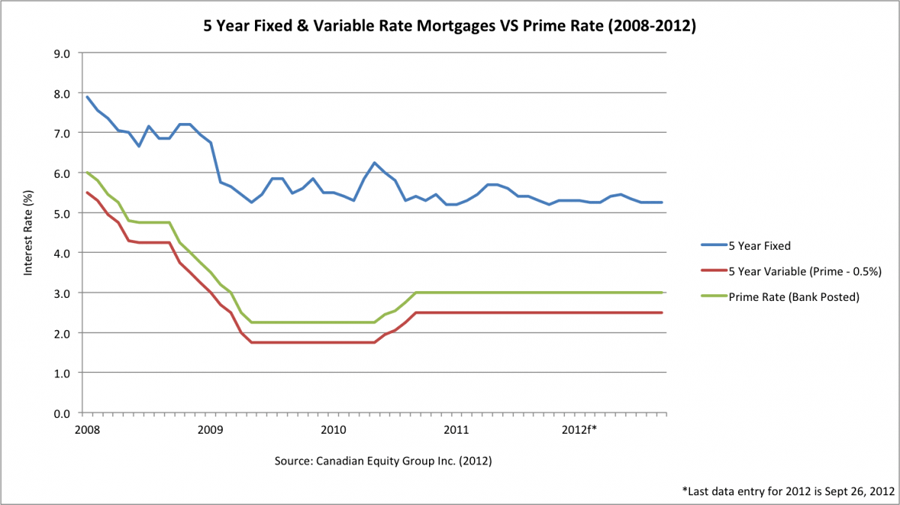
The 2 basic kinds of amortized loans are the fixed rate home loan (FRM) and adjustable-rate home mortgage (ARM) (also referred to as a drifting rate or variable rate home mortgage). In some nations, such as the United States, repaired rate mortgages are the standard, however drifting rate home mortgages are relatively common. Mixes of fixed and drifting rate home mortgages are also typical, whereby a mortgage will have a fixed rate for some duration, for instance the very first 5 years, and differ after completion of that duration.
When it comes to an annuity repayment scheme, the regular payment stays the exact same amount throughout the loan. In the case of linear payback, the routine payment will gradually decrease. In a variable-rate mortgage, the rate of interest is normally fixed for an amount of time, after which it will regularly (for instance, annually or monthly) adjust up or down to some market index.
The Greatest Guide To Reverse Mortgages How Does It Work
Since the danger is transferred to the borrower, the initial rates of interest may be, for example, 0.5% to 2% lower than the average 30-year fixed rate; the size of the cost differential will be associated with debt market conditions, consisting of the yield curve. The charge to the debtor depends upon the credit danger in addition to the rates of interest danger.
Jumbo mortgages and subprime loaning are not supported by government warranties and face higher rates of interest. Other innovations explained listed below can affect the rates as well. Upon making a home mortgage loan for the purchase of a home, lenders normally need that the borrower make a down payment; that is, contribute a part of the cost of the property.
The loan to value ratio (or LTV) is the size of the loan versus the worth of the residential or commercial property. Therefore, a mortgage loan in which the purchaser has made a deposit of 20% has a loan to worth ratio of 80%. For loans made against residential or commercial properties that the debtor currently owns, the loan to value ratio will be imputed against the estimated value of the property.
Considering that the value of the property is a crucial factor in comprehending the risk of the loan, identifying the value is an essential element in home mortgage lending. The worth may be identified in numerous ways, however the most typical are: Real or deal worth: this is usually taken to be the purchase cost of the home.
The How Mortgages Work Wall Street Survivor Diaries
Evaluated or surveyed value: in a lot of jurisdictions, some kind of appraisal of the value by a certified professional prevails. There is typically a requirement for the lender to acquire an official appraisal. Approximated value: lenders or other parties may use their own internal quotes, especially in jurisdictions where no authorities appraisal procedure exists, but also in some other situations.
Common denominators consist of payment to income (home mortgage payments as a percentage of gross or earnings); debt to income (all financial obligation payments, consisting of mortgage payments, as a portion of income); and numerous net worth measures. In lots of countries, credit rating are used in lieu of or to supplement these steps.
the specifics will differ from area https://www.benzinga.com/pressreleases/20/02/p15374673/34-companies-named-2020-best-places-to-work to place. Income tax incentives generally can be applied in forms of tax refunds or tax deduction plans. The very first suggests that income tax paid by specific taxpayers will be reimbursed to the degree of interest on home loan taken to acquire house.
Some lending institutions might also require a possible customer have one or more months of "reserve assets" offered. Simply put, the borrower may be required to show the schedule of adequate properties to pay for the housing costs (including home loan, taxes, and so on) for an amount of time in the event of the task loss or other loss of earnings.
Some Known Incorrect Statements About How Do Canadian Mortgages Work
Lots of countries have an idea of basic or conforming mortgages that specify a viewed acceptable level of danger, which might be official or informal, and may be strengthened by laws, federal government intervention, or market practice. For example, a basic home mortgage may be thought about to be one with no more than 7080% LTV and no more than one-third of gross earnings going to mortgage debt.
In the United States, a conforming home mortgage is one which satisfies the recognized rules and treatments of the 2 major government-sponsored entities in the housing financing market (including some legal requirements). On the other hand, lenders who decide to make nonconforming loans are working out a greater threat tolerance and do so knowing that they deal with more difficulty in reselling the loan.
Managed lending institutions (such as banks) may undergo limits or higher-risk weightings for non-standard home mortgages. For example, banks and home mortgage brokerages in Canada deal with limitations on providing more than 80% of the residential or commercial property value; beyond this level, home loan insurance is generally required. In some nations with currencies that tend to depreciate, foreign currency mortgages are typical, enabling loan providers to provide in a stable foreign currency, whilst the customer handles the currency risk that the currency will diminish and they will for that reason require to convert greater amounts of the domestic currency to repay the loan.
Payment depends upon locality, tax laws and dominating culture. There are also various mortgage payment structures to suit various kinds of debtor. The most common method to pay back a secured mortgage is to make routine payments toward the principal and interest over a set term. [] This is frequently described as (self) in the U.S.
Get This Report about Reverse Mortgages And How They Work
A mortgage is a form of annuity (from the perspective of the lender), and the estimation of the regular payments is based on the time worth of money formulas. Particular details may be specific to various places: interest may be calculated on the basis of a 360-day year, for example; interest may be intensified daily, yearly, or semi-annually; prepayment charges may use; and other aspects.
Depending on the size of the loan and the prevailing practice in the nation the term might be short (10 years) or long (50 years plus). In the UK and U.S., 25 to thirty years is the typical optimum term (although shorter periods, such as 15-year mortgage, prevail).
The amount going toward the principal in each payment differs throughout the term of the home mortgage. In the early years the repayments are mainly interest. Towards completion of the home mortgage, payments are primarily for principal. In this method, the payment quantity identified at start is determined to ensure the loan is repaid at a specified date in the future.