Loan can just be called due if contract terms for repayment, taxes, and insurance aren't fulfilled. Lending institution takes the property upon the death of the borrower so it can't pass to heirs unless they re-finance to pay the reverse mortgage off. Property might need to be offered or re-financed at the death of the debtor to settle the loan.
You 'd discover yourself in a position where you need to pay back the loan at a time when doing so may be impossible if you require an extended stay in a long-lasting facility. A reverse home loan lending institution can foreclose and take your home if you fail to pay back the loan when you leave.
Another drawback is the ongoing expense of keeping your home. You'll be required to stay up to date with your home's associated expenses. Foreclosure is possible if you find yourself in a position where can't keep up with real estate tax and insurance coverage. Your lender might "reserve" some of your loan proceeds to satisfy these costs in case you can't, and you can also ask your loan provider to do this https://www.chamberofcommerce.com/united-states/tennessee/franklin/resorts-time-share/1340479993-wesley-financial-group if you believe you might ever have problem paying for property taxes and insurance - when did 30 year mortgages start.
Your lender might select foreclosure if and when your loan balance reaches the point where it surpasses your home's value. On the positive side, reverse home mortgages can offer money for anything you want, from extra retirement income to money for a large house enhancement job. As long as you fulfill the requirements, you can use the funds to supplement your other sources of earnings or any cost savings you've built up in retirement.
Who Has The Best Interest Rates On Mortgages for Beginners
A reverse home loan can definitely reduce the tension of paying your expenses in retirement or even enhance your lifestyle in your golden years. Reverse home mortgages are only readily available to house owners age 62 and older. You normally don't have to repay these loans until you move out of your house or pass away.
Otherwise, the loan will come due. You must satisfy some standard criteria to receive a reverse home mortgage. For instance, you can't be delinquent on any debt owed to the federal government. You'll need to show to the loan provider that you're capable of keeping up with the ongoing expensesof keeping your house.
You need to participate in therapy, a "consumer info session" with a HUD-approved therapist, prior to your HECM loan can be funded. This guideline is meant to guarantee that you understand the cost and repercussions of securing this kind of loan. Therapists work for independent organizations. These courses are available at a low expense and often they're even totally free.
For most borrowers, this means settling your staying mortgage financial obligation with part of your reverse mortgage. This is most convenient to achieve if you have at least 50% equity or so in your house. You have a few options, however the most basic is to take all the cash at as soon as in a lump sum.
Rumored Buzz on How Do Reverse Mortgages Work?
You can also choose to get routine routine payments, such as once a month. These payments are described as "tenure payments" when they last for your entire life time, or "term payments" when you get them for just a set time period, such as 10 years. It's possible to take out more equity than you and your lending institution anticipated if you go with period payments and live an exceptionally https://www.bizjournals.com/nashville/news/2020/04/13/nbj-reveals-the-2020-best-places-to-work-honorees.html long life.
This enables you to draw funds only if and when you need them. The benefit of a line-of-credit technique is that you only pay interest on the money you've in fact obtained. You can also use a mix of payment choices. For instance, you might take a small lump amount upfront and keep a credit line for later on.
For example, the home will go on the marketplace after your death, and your estate will get money when it offers. That money that must then be utilized to pay off the loan. The full loan quantity comes due, even if the loan balance is greater than the home's worth, if your successors decide they want to keep the house.
Lots of reverse home loans include a provision that does not permit the loan balance to exceed the value of the house's equity, although market variations might still lead to less equity than when you took out the loan. It's possible that your estate might supply enough other assets to enable your successors to pay off the reverse home loan at your death by liquidating them, however they may otherwise not be able to get approved for a regular home loan to pay off the financial obligation and keep the household house.
How Many Mortgages Are There In The Us - Questions
You'll pay much of the very same closing expenses required for a standard house purchase or refinance, however these fees can be higher. Costs lower the quantity of equity left in your house, which leaves less for your estate or for you if you choose to sell the home and settle the home mortgage.
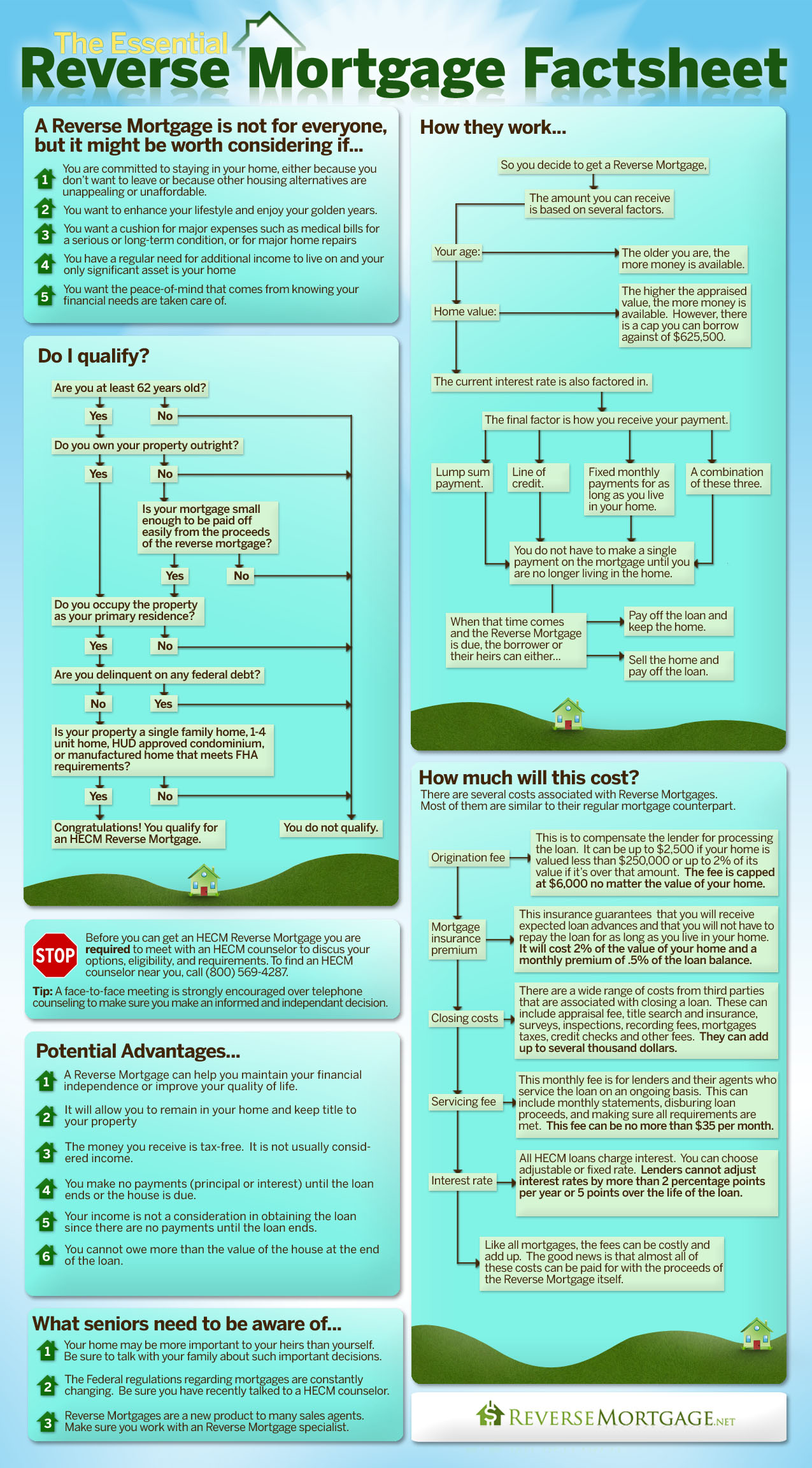
Charges are frequently funded, or built into your loan. You don't write a check for them at closing so you may not feel these expenses, but you're still paying them regardless. You should have your house evaluated, including to your costs. The lender will wish to make certain that your home in tip-top shape prior to writing the loan.
A reverse home loan lets older property owners take advantage of their home's equity for a lump amount payment, routine payments, or in the form of a line of credit. Reverse home mortgages don't have to be paid back till the property owner dies or moves out of the home. Remains in care facilities for less than a year are all right.
Interest accrues over the life of the loan, so the amount essential to settle the home mortgage will likely be considerably more than the initial loan earnings - which of the following statements is true regarding home mortgages?.
Some Known Factual Statements About How Do Lenders Make Money On Reverse Mortgages
The financial outlook for America's aging population can appear pretty bleak. More than 40% of baby boomers have no retirement savings, according to a research study from the Insured Retirement Institute. Of the boomers who did manage to conserve for retirement, 38% have less than $100,000 leaving a lot of them without the money they'll need.
Well-meaning grandparents who cosigned on student loans to help their kids or grandchildren defray the expenses of college efficiently increased their own student loan debt problem from $6.3 billion in 2004 to $85.4 billion in 2017. Nevertheless, there is a silver lining to this sobering story. which follow this link of the following statements is true regarding home mortgages?. Baby boomers own 2 out out every five homes in the U.S., with an estimated $13.5 trillion in value.
House cost boosts since 2012 are supplying more accessible equity for seniors in need of the versatility of the reverse home loan program to resolve existing monetary problems, or avoid them from happening in the future. Here's a guide to comprehending reverse mortgage, how they work and whether they're an ideal suitable for you.
A reverse home mortgage does just the opposite. Your balance increases over time as you access the equity accumulated in your house. After evaluating just how much equity is in your home, a reverse home loan lender will provide you money in a lump amount, as monthly income or a mix of both.